Clay or hard court: which surface is better for tennis
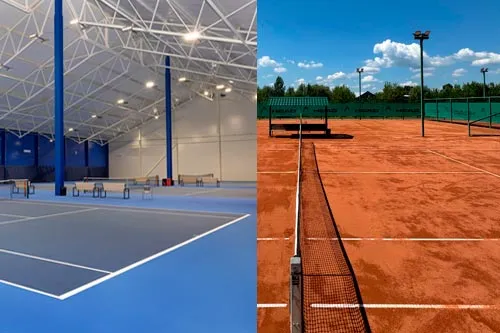
Tennis isn't just about technique and strategy; it's also about choosing the right court surface. It directly affects ball speed, body strain, and even playing style. At the Marina Tennis Club in Kyiv, players train on both clay and hard courts—each type offering its own characteristics and advantages.
Clay Courts: Comfort and Control
Clay is a classic European tennis surface. Its base is a fine brick-like powder, providing excellent traction and a soft feel. Playing on clay requires patience, endurance, and the ability to build long rallies.
Advantages of Clay
- Less strain on joints and ligaments due to the soft surface.
- The ball bounces higher and slower, allowing for better shot control.
- Ideal for learning technique and developing tactical thinking.
That's why many beginner players start on clay courts—it's safe and helps develop proper movements. Professionals also often choose clay to hone their patience and endurance.
Clay courts are the best choice for those looking to improve their technique and develop consistency in their game.
Hard: Speed and Dynamics
Hard surfaces are more often used in professional tournaments, such as the US Open or Australian Open. This synthetic surface provides a stable and predictable bounce.
Advantages of Hard Courts
- Fast play and short rallies.
- Suitable for players who prefer an aggressive style and powerful shots.
- Weather resistance – hard courts require less maintenance.
However, it's worth remembering that playing on hard courts places greater stress on your joints and back, so it's important to choose the right footwear and warm up before training.
How to Choose a Surface to Match Your Playing Style
If you're just starting out in tennis, Marina Tennis Club coaches recommend starting with clay. It's forgiving and helps develop coordination and technique. If you're already confident with your racket and want more dynamism, try hard.
Many professionals combine training on both surfaces to develop a versatile style of play. This is especially helpful if you compete in tournaments of varying levels and surfaces.
Conclusion
So, clay and hard are not rivals, but rather different opportunities for your tennis development. The main thing is to choose the one that suits your needs and goals. At Marina Tennis Club, you can try both surfaces and decide which feels more comfortable.
Sign up for a training session and test both surfaces—clay and hard. Feel the difference and find your playing style with the experienced coaches at Marina Tennis Club!